Ah, a fresh new year. January is the month where the calendar flips and the entire internet goes, “Congrats. You’ve been selected for the next Season of Becoming A Better Person.” And you’re like, “Bro, I didn’t even finish Season 3. I’m still watching the recap, trying to remember what happened.”
But that doesn’t stop anyone. For a few days, “New Year” works. People search it, brands sell it, and everyone’s pretending they’ll become the kind of person who has a water bottle with measurements on it while telling people that they’ve been really into magnesium lately.
Then business realities slap us right across our newly resolved faces.
It’s not your competitors, not Apple’s AI summaries, and not “Gen Z hates email.” The real villain of January is hustle culture. It’s the feeling that everything restarted at once (habits, budgets, routines, expectations) and you’re already behind.
Search trends on RGE basically narrate the plot of the most-saved emails of January 2026: “New Year” starts hot, then falls off. “Welcome” nearly triples as the month goes on. Categories like “travel,” “health and wellness,” and “food” get more eyeballs than in other months. And “Valentine’s” shows up late in the month, like the procrastinators we all are.
But here’s my take for the month when I look at the data: January is “relief” month more than “hype” month. The emails that were poppin’ are the ones that lean into that kind of marketing psychology. The best January emails reduce friction, reduce decision fatigue, and reduce perceived risk. They lower the mental cost of engagement. In a month where everyone’s attention is taxed, the email that simplifies the next step feels like a gift.
The “what’s in it for me” (aka why you should care)
If you nail January, you get three things that are hard to buy with discounts:
- More clicks without having to scream. (Because you’re reducing cognitive load.)
- More habit formation. (Because you’re turning intent into action.)
- More trust. (Because you’re not piling on pressure—you're providing structure.)
Now, here’s the story of how the best emails did that.
New Year messaging didn’t die — it got smarter and started bringing receipts
Most “New Year” emails do the same thing every year: they try to motivate someone into becoming a new species. That’s the part that burns out fast. But one version of “New Year” content survives because it’s useful: Year in Review emails like Wrapped, Awards, and Recaps.
Psychologically, this works because of closure and competence. People want to feel like the past year “counted,” and they want a clean narrative. These summary emails provide meaning without demanding effort. It’s low friction, high reward: you feel informed just by reading.
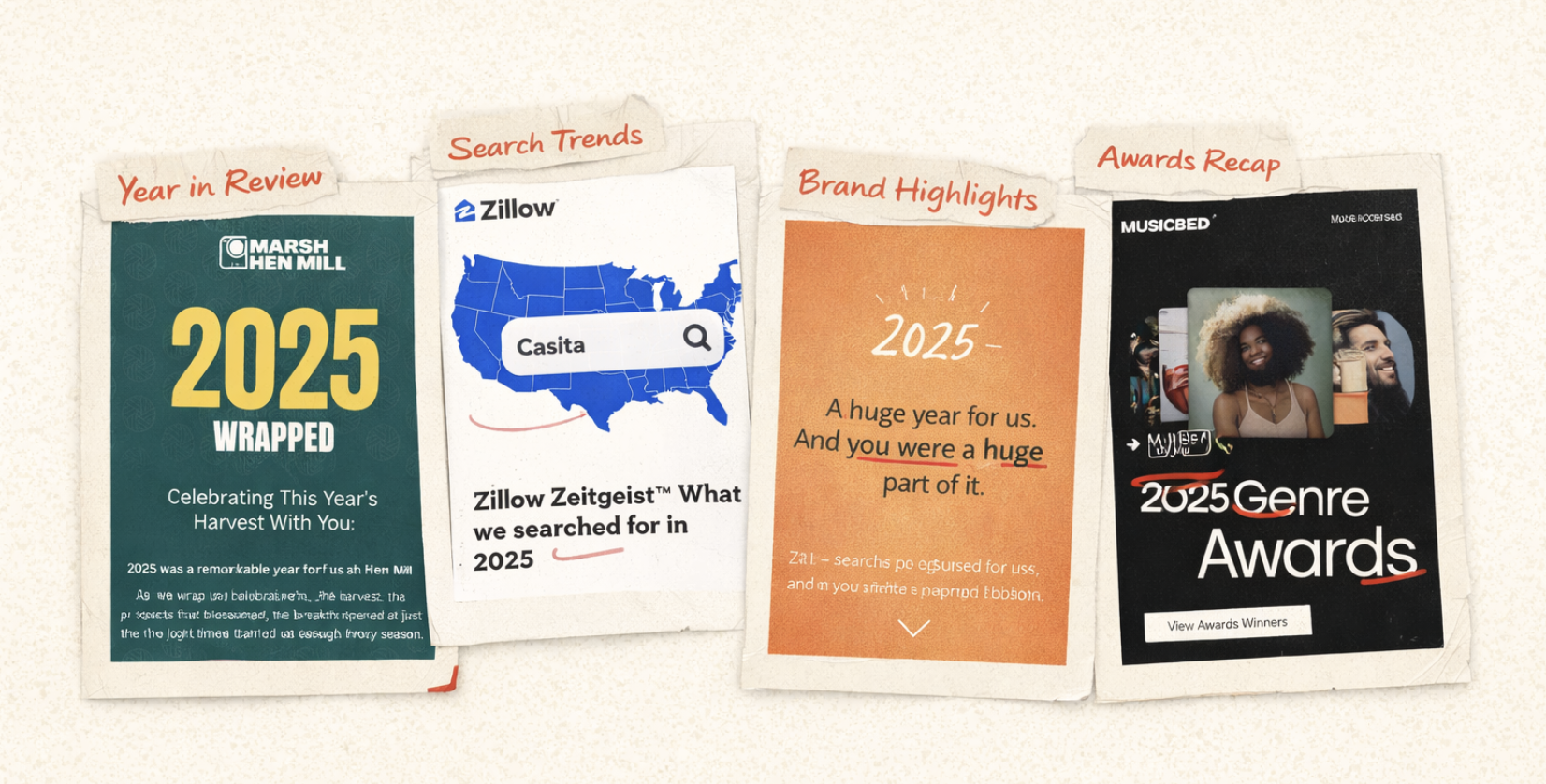
Examples (all that fit): Marsh Hen Mill (2025 Wrapped), Bellroy (year recap), Musicbed (Genre Awards), Zillow (Zeitgeist report).
What’s in it for you: These emails earn engagement without discounting, and they build brand authority because you’re “the one who knows what’s going on.” You don’t need to wait for earth to go around the sun one more time, though. You can find usually find ways to do something smaller on a quarterly cadence.
Then January pivots from “reflect” to “help me run my life”
After you give people receipts, they’re ready for the next question: “Okay. Cool. So… what do I do now?”
This is where the “reset and recalibrate” angle takes over, and it’s bigger than what wellness emails do (from what we’ve seen in prior monthly trends). It’s a framing that turns your product into a control panel with baselines, tracking, results, schedules, habits, and overall coverage. It fits into people’s “real life” and isn’t just a crummy motivational poster from the ‘90s. In other words, it looks more like a systematic, achievable approach.
And it works because it’s reducing uncertainty as one of the strongest persuasion levers. If your customer feels unsure (about health, money, routines, parenting, whatever), they avoid action. But if you make progress feel measurable and clear, you reduce perceived risk and increase follow-through. Also, systems language triggers self-efficacy, which is the feeling that “I can actually do this,” and it’s basically the rocket fuel of retention.
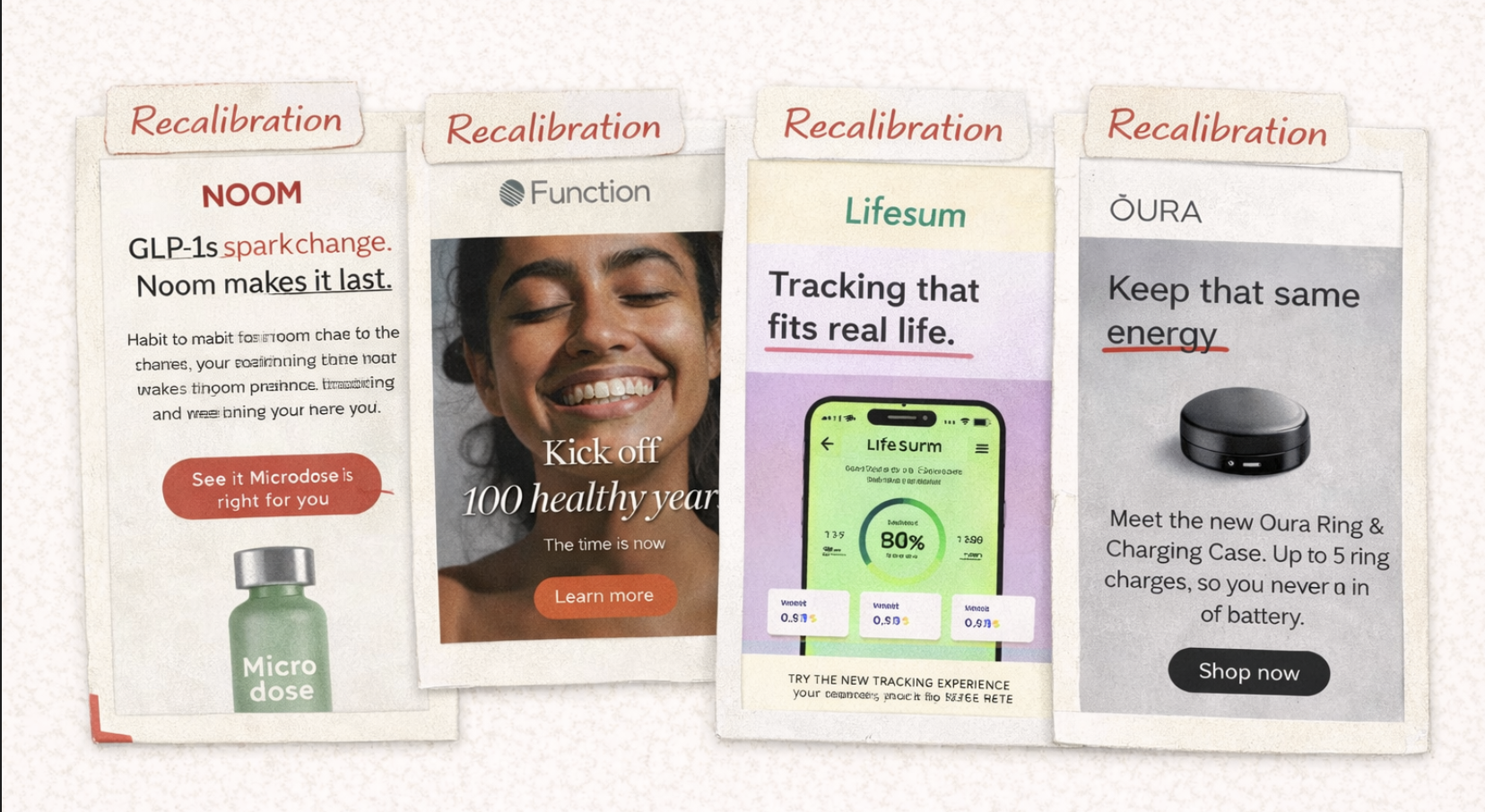
Examples: Noom, Lifesum, Function Health (multiple), Headspace, Ritual, Brez, Ōura, Lush.
What’s in it for you: “reset/recalibrate” framing increases conversion because it makes the customer feel like buying = gaining control, not buying = taking a risk.
Meanwhile, “Welcome” emails spiked because people wanted a next step.
Let’s remember that in January, people are in a fragile state. They’re open to change, but they’re also exhausted and overwhelmed. So the winning move isn’t “welcome!” It’s getting set up correctly.
The best onboarding emails look like product activation flows: clear steps, one primary action, minimal decisions. They’re designed like interfaces. Because interface design has one job: reduce confusion. And confusion is where conversions go to die.
Psychology-wise, this is behavioral momentum. If you can get someone to take a small first action, they’re more likely to keep going (consistency bias). Onboarding is basically “foot in the door,” but with better typography and direction.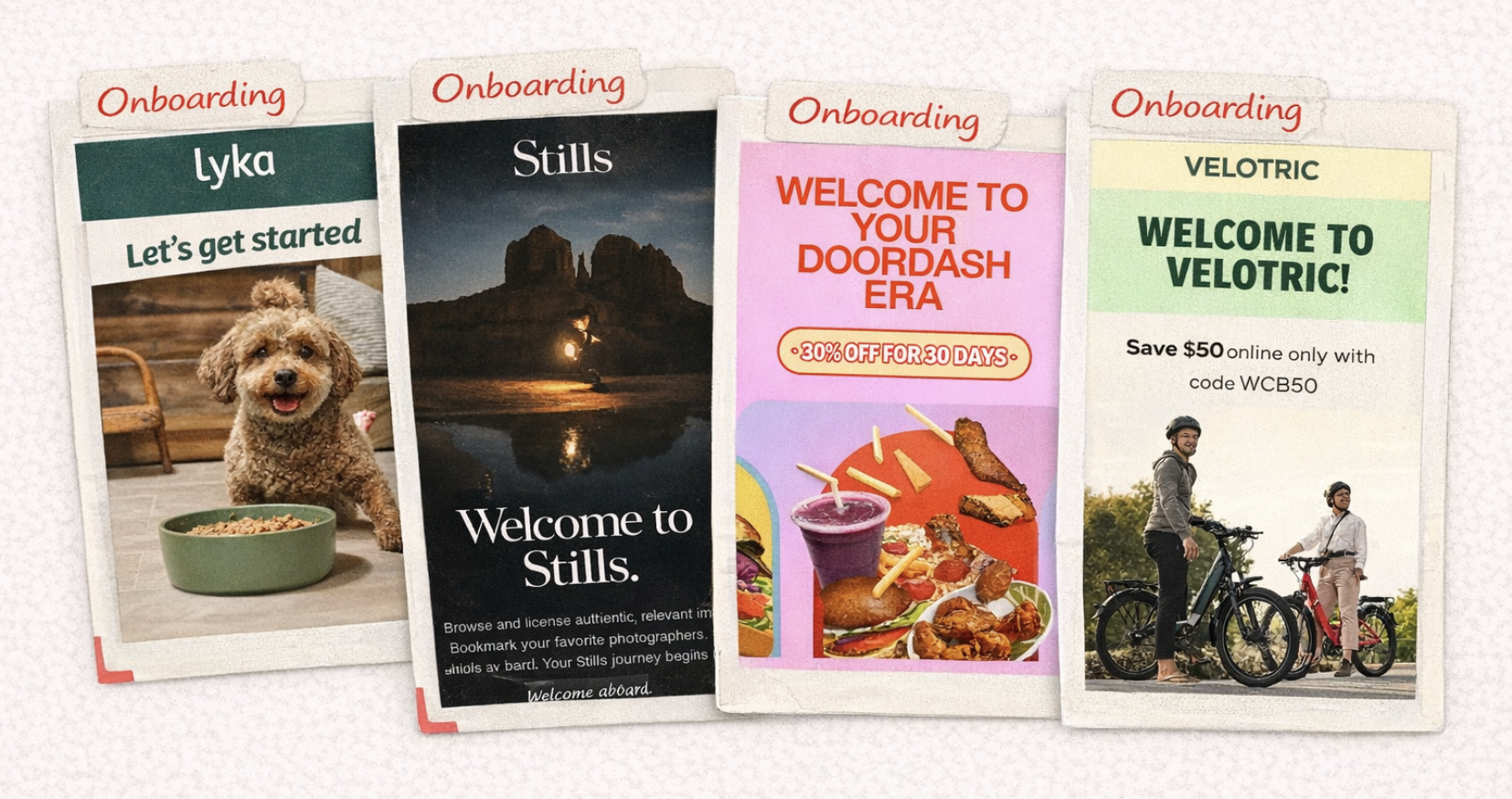
Examples: Lyka, Stills, DoorDash, Anthropic, Intuit, Velotric, Tripadvisor.
And the design language enabling this shows up everywhere:
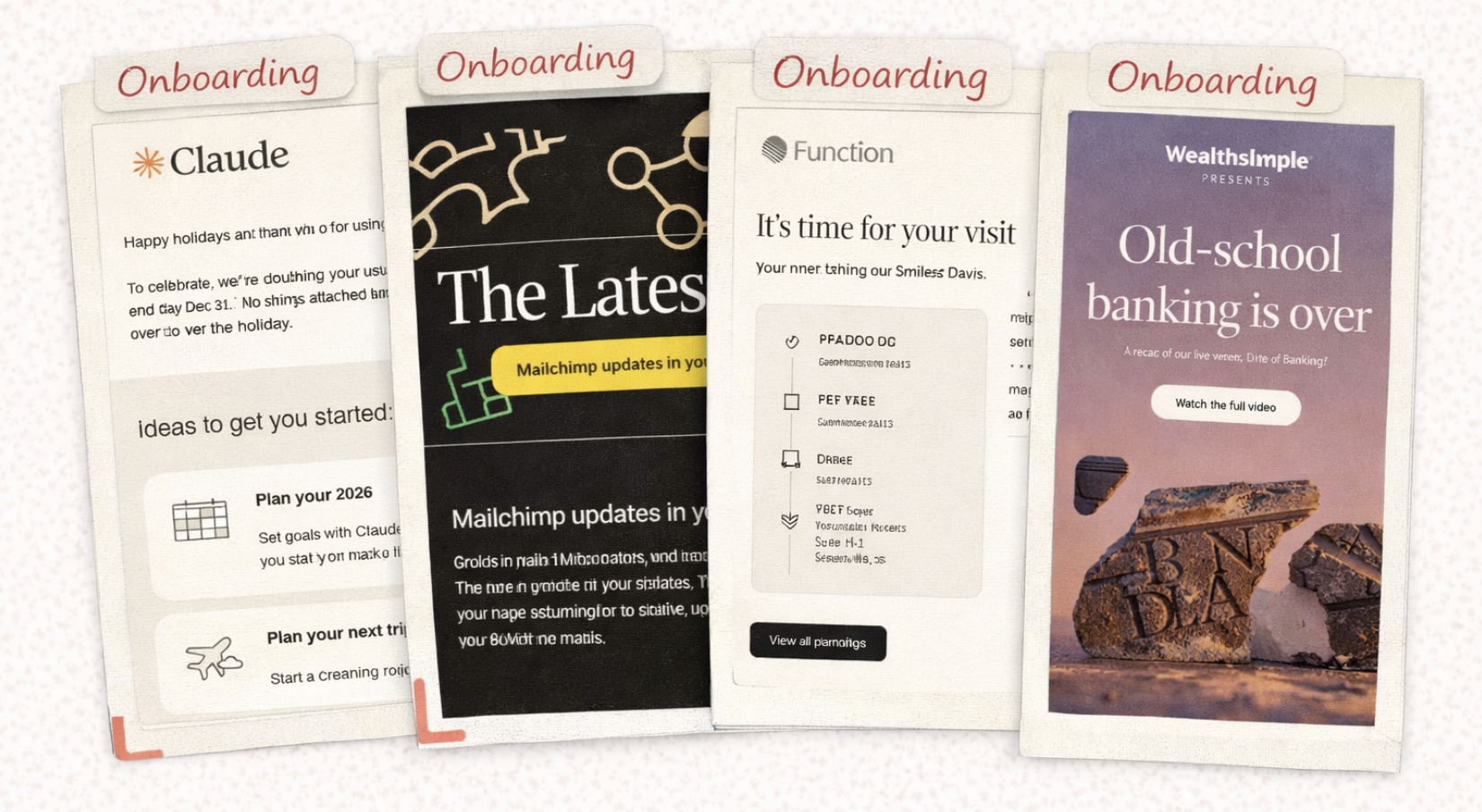
Examples: Anthropic, Intuit, Zapier, Zillow, Wealthsimple, Tripadvisor, Function Health.
What’s in it for you: better onboarding email design = higher activation = less churn = you don’t have to keep reacquiring the same customer in a different hat.
And, surprise, brands stopped yelling and started offering relief.
Over the years, the beginning of the year’s marketing usually sounds like a personal trainer with a megaphone: “YOU CAN DO HARD THINGS.” Which is true, but also I’d prefer not to.
This year, on the other hand, seems to be quieter and smarter, with a touch of gentle language. “Fits real life.” “You’re covered.” “Softer start.” “Tired parents, rejoice.” “We’re not for everyone.” It’s anti-hustle without ever calling itself anti-hustle.
Psychologically, this works because it reduces reactance. (Yes, that is a real word that I think only people who are in academia use.) Reactance is that internal “don’t tell me what to do” resistance that spikes when people feel pressured. So if you want to ease someone in, you want to be gentle. Gentleness disarms. Relief converts. It also builds trust because you’re not asking the reader to become someone else; you’re supporting who they already are.
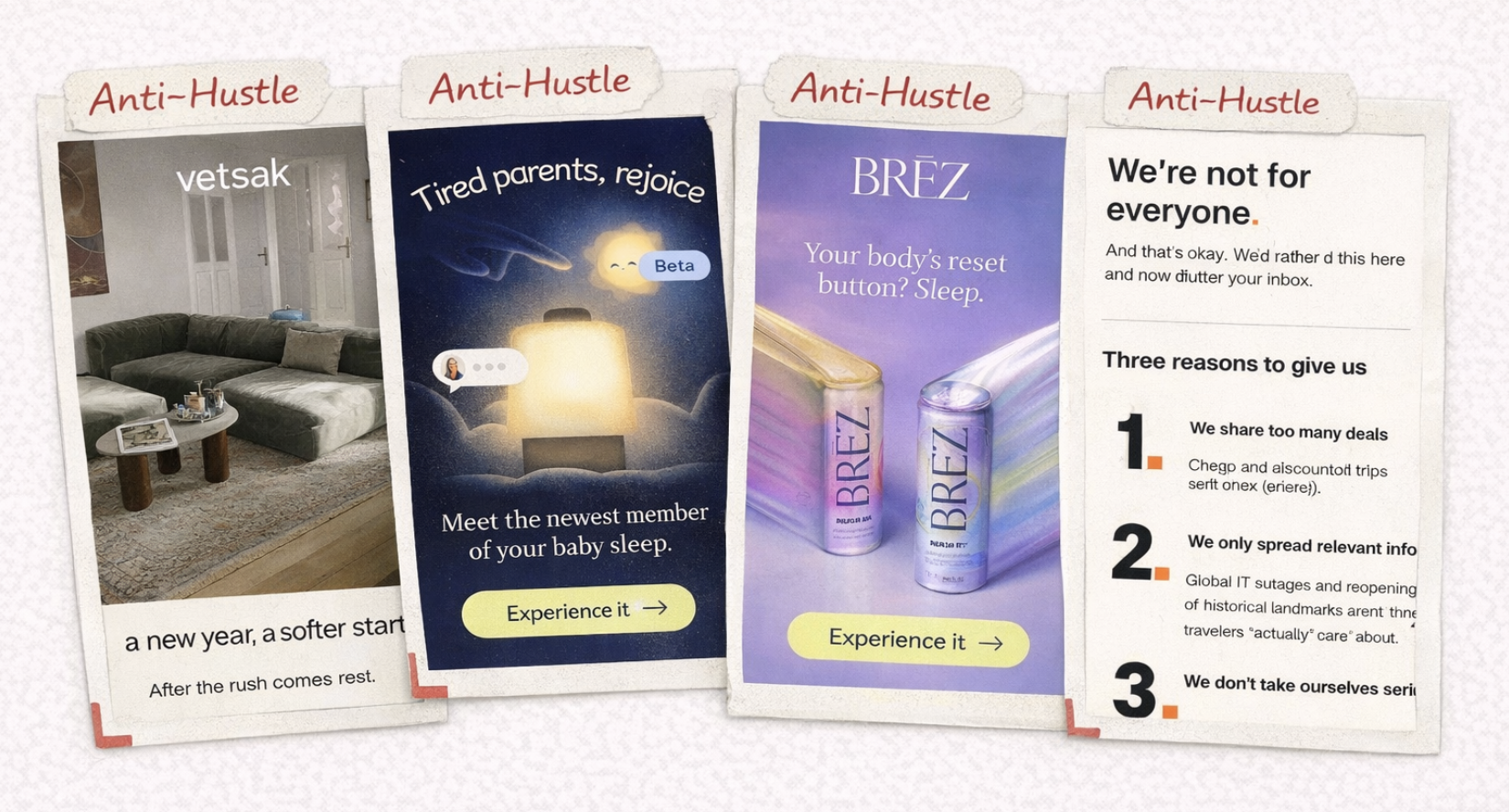
Examples: Vetsak, Brez, Hatch, Kayak
What’s in it for you: less pressure language can increase conversion because it lowers defensiveness and increases “this brand gets me” affinity.
Which may be why comfort became a strategy, not an aesthetic.
Once the month shifts from “reinvent yourself” to “please let me live,” purchases follow. People buy rituals. Not random products—rituals.
Coffee routines. Sleep routines. Softer starts. Home upgrades. Anything that makes daily life feel less jagged.
This works because rituals create repeat purchase loops and identity reinforcement: “I’m the kind of person who has a wind-down routine.” Brands love rituals because rituals are sticky.
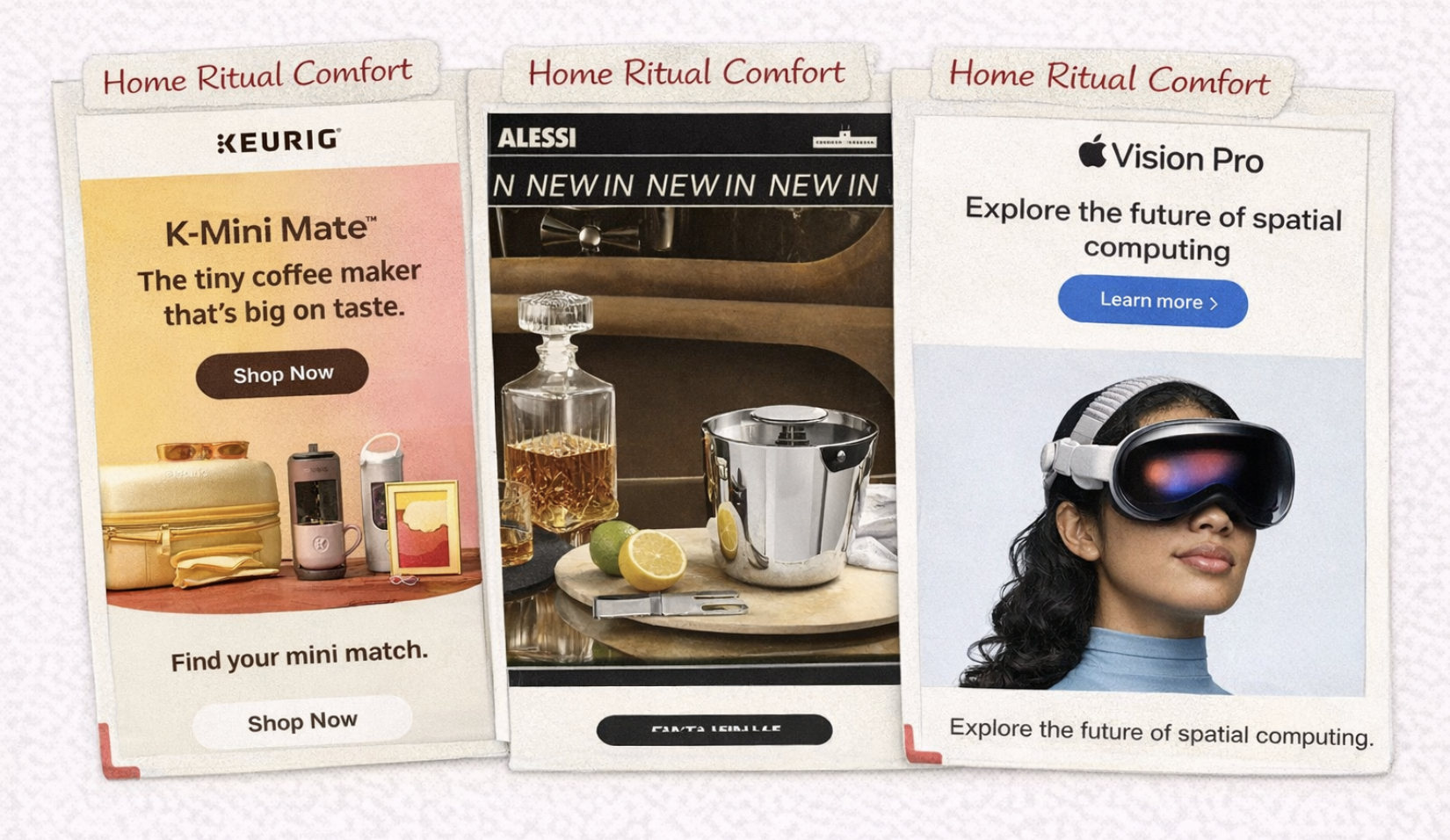
Examples: Keurig, Apple, Alessi, Ritual.
What’s in it for you: rituals are the gateway drug to retention. If you can attach your product to a daily moment, you stop competing on price.
And that’s where the ‘food that teaches’ trend steps in too. It’s not just pretty pictures of cookies, coffee, and cooking oils. It’s because marketers know that this is when people want something that works. A menu drop, a simple recipe, a ‘here’s what to do with this’ email is basically a cozy blanket for decision fatigue. It turns food into a repeatable ritual instead of another project.
Teaching also triggers reciprocity: you gave me something useful, so I’m more willing to give you attention/money. Plus, “here’s what to do with it” reduces the dreaded post-purchase regret spiral.
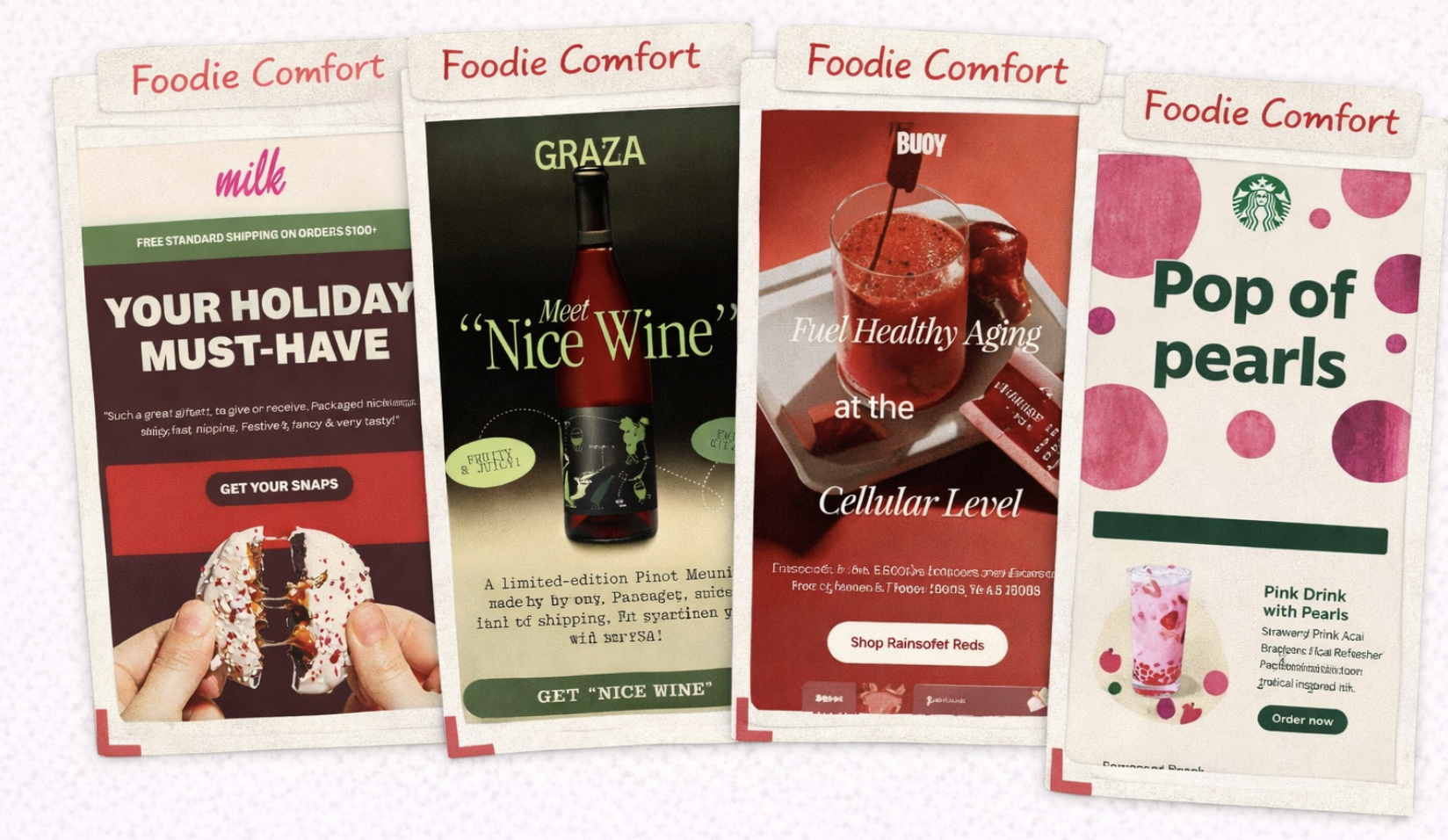
Examples: Marsh Hen Mill, Cometeer, Starbucks, Beast Health, Milk Bar, Graza.
What’s in it for you: teaching content increases conversion and lowers returns/churn because customers feel more confident actually using what they b9ought.
The punchline of January 2026 (and the move you can steal immediately)
The best January emails did three things, over and over:
- They made the reader feel stable.
- They made the next step obvious.
- They made the email feel like a comfort zone.
That’s why these trends hang together as one story. January isn’t the month to demand transformation. It’s the month to provide structure and then let people build from there.
The brands that won weren’t yelling “new year new you.” They were doing something much more persuasive:
- They offered a control panel (reset & recalibrate).
- They removed decision fatigue (setup-screen onboarding + UI layouts).
- They lowered reactance (gentle stability language).
- They built rituals (comfort).
- They taught something new (reciprocity).
If you’re reading this as an email maker, here’s your cheat code: be the calmest thing in someone’s inbox. Make the next step obvious. Make progress feel manageable. Make the email itself useful.
And once you’ve done that… then you can start warming up Valentine’s and travel like the rest of the internet.